|
|
|
|
|
|
|

|
APA
RESOURCES ASIAN RESOURCES INDIE RESOURCES TOOLS
INDIE FILMS AMERICAN RESOURCES R.I.P. COMMENTARY EVENTS INTERVIEWS PROFILES COMEDY RESOURCES INDIE FILMS INFO DIVERSITY BUSINESS INFO MEDIA INFO ENT. BIZ & POLITICS
ONLINE DANCE
|
Vote For Your Favorite APA Films
WHAT WILL BE OUR NEXT SUCCESSFUL FILM? Within our monthly "FILM POLL" (see below) - it is our hope to locate visionary films from creative directors with great scripts from the Asian/Asian Pacific American communities. Every month, fifteen (15) films will be listed for your consideration and support. One of our other goals is to help build a fast-growing legion of informed artists and media advocates that will carry the appropriate weight to create effective changes. Without knowledge of our own historic past, our trail-blazing entertainment pioneers from the early 20th century, working knowledge of how the entertainment industry functions, etc. - the words written in the media and words spoken with various Asian Pacific American advocates will not carry the appropriate weight or response.
PERCEPTIONS OF OUR PAST AND FUTURE
Mercury
News' Marian Liu reports that "For Asian-Americans,
the move toward entertainment careers has been a recent one, stretching
the past 40 years, starting with such stereotypical films as the Rodgers
and Hammerstein musical "Flower
Drum Song." (Editor's
Note: This "stereotypical film" was based on the first
Chinese
American novel to be published by an established publishing house,
the first
Chinese American novel to be on the best-seller list, the first
Broadway/major movie studio production to feature, star and about
Asian Americans, the female stars of the Broadway show -- Pat Suzuki
and Miyoshi Umeki -- became the first Asian Americans to be on the cover
of Time and Newsweek and the film that launched the careers of Miyoshi
Umeki, Jack Soo, James Shigeta, and Nancy Kwan.) EDITOR'S
NOTE: Sadly, it seems that the above-listed writer (along
with many within the Asian/Asian Pacific American communities)
have forgotten the achievements and victories of past entertainment
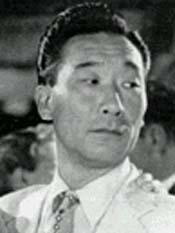
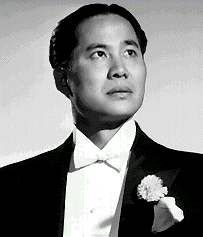
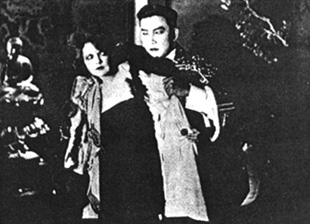
pioneers in the 1920's (some of the pioneers are listed on the
"left") and the various non-stereotypical milestones
seen in the movie "Flower Drum Song." Plus,
no film (speaking
of "Better Luck Tomorrow") can change the industry by itself,
says Harry
Lin, a veteran of Bay Area broadcasting who now is executive vice
president of ABC's Web site, abc.com.
``The
movie industry is very conservative,'' Lin
says. ``It's not proactive to change or trying to make waves. That's
why independent film and cinema
is so important: It's where change and risk occurs.''
Some
APA upcoming entertainers such as Dat
Phan has gone to
the final rounds in NBC's
"Last Comic Standing." Others such as Harlemm
Lee (Editor's Note: We want to congratulate Harlemm in winning the
"Grand
Prize.") and Jamisen
Tiangco have done well in Debbie Allen's talent program titled "Fame."
ANY PROGRESS FOR ASIAN AMERICAN FEMALES IN THE
MEDIA - Have Asian American women progressed in American consciousness
so much so that they erases the persisting negative stereotypes? Some
argue that the presence of Asian American women, such as Connie Chung
(television news anchor), Lucy Liu (television/movie star), and Tia
Carrere (movie star) in the media is indicative of mainstream America's
acceptance of Asian American women. DEFINITION OF A DRAGON LADY - Another
stereotype of Asian Women that is perpetuated through the media is that
of the Dragon Lady. A Dragon Lady is an evil, deceitful, and domineering
woman. This derogatory term was originally the name of a villainous
Asian women in Milton Caniff's popular cartoon strip Terry and the Pirates
(1934-1973), which ran in many newspapers. REDEFINING ASIAN AMERICAN MALE MASCULINITY
- American popular culture is notoriously male-centered. For Asian Americans,
however, the situation appears to be reversed, which may be yet another
reflection of the power of the dominant culture. Novelist Amy Tan is
more widely read than novelist Shawn Wong; comedian/actor Margaret Cho
got a shot at a network television series, while Russell Wong had to
settle for starring in the syndicated Vanishing Son; and Asian American
women anchor local news broadcasts across the country, while Asian American
men occupy less visible positions as field reporters. ASIAN AMERICAN MALE BASHING IN THE AMERICAN
MEDIA - I think the dating imbalance, i.e. more Caucasian males
with Asian Females versus Asian males with Caucasian females, is caused
by a racist media in America that portrays Asian male as undesirable,
asexual, nerdy, and so on, and Asian female as the ready toy for any
white guy, no matter how dorky, as Wayne's World or Star Trek amply
illustrate for us. For instance, there are eight hundred Asian female
anchors, one for each major metropolitan area in the United States.
But there is only one Asian male news anchor in the entire United states.
SHURIKEN'S TOP 10 YELLOWFACE ROLES 10. David Carradine in KUNG FU (1972-75) - David Carradine's Amerasian Shaolin monk, Kwai-Chang Caine, roaming the Wild West on the TV show Kung Fu survives as one of the least objectionable. 9. Larry Blyden in FLOWER DRUM SONG (1958) - the pivotal role of nightclub owner Sammy Fong on Broadway went to Larry Blyden, a Jewish actor from Texas. 8. Joel Gray in REMO WILLIAMS: THE ADVENTURE BEGINS (1985) - Transforming the very Caucasoid thespian Joel Gray into Chiun, the title character's (Fred Ward) Korean martial-arts instructor was extremely realistic. 7. Warner Oland - The Swedish-born, American-raised actor Warner Oland made virtually an entire career out of playing Asian characters — from "Oriental" villains in Pearl White serials to Fu Manchu to Charlie Chan. Oland's busy and lucrative life- work stands as a disturbing reminder that a Caucasian actor could make a career for himself in Hollywood by specializing in Asian roles 6. Sean Connery in YOU ONLY LIVE TWICE (1967) - the secret agent emerges looked like a droopy-eyed hakujin who's had too much to drink.
5. Alex Borstein as Ms. Swan on MAD TV (1997-2002) - Mad TV must have known that they were treading on volatile ground when they unveiled their slant-eyed, gibberish-speaking, bowl-haired manicurist called Ms. Kwan, played by non-Asian actress Alex Borstein, in 1997.
4. Boris Karloff in THE MASK OF FU MANCHU (1932) - Boris Karloff in heavy facial prosthetics — perhaps more than any other film — works to demonize Asian racial features as inherently evil. 3. Mickey Rooney in BREAKFAST AT TIFFANY'S (1962) - Donning false buck teeth and eye make-up, Mickey Rooney portrays the Japanese character of Mr. Yunioshi as a funny-looking buffoon whose speech is garbled and actions inept. 2. Harold Huber and June Duprez in LITTLE TOKYO, U.S.A. (1942) - Takimura (played in yellowface by Harold Huber) is shown to represent that even Japanese Americans who are born in the U.S. can't be trusted. In retrospect, knowing that not a single charge of espionage was ever brought against a Japanese American during wartime, this sensationalistic story reeks of racist propaganda. 1. Jonathan Pryce in MISS SAIGON (1991) - Miss Saigon exemplified the mainstream's insensitivity to the entertainment industry's discrimination against its Asian American talent.
There are countless other young actresses hanging out at Sky Bar, sending out 50 head shots a day, and they can't get an agent to return their calls. Would-be screenwriters nurse their hopes sipping quadruple espressos on Melrose and Sunset with laptops open on cafe tables, trying hard to look cool while pounding out yet another rewrite of a scene that probably no studio executive with the authority to do anything about it will ever see. But it's not easy to get a break and survive in Hollywood — to get that crucial foot in the door in one of the most cloistered businesses in the world. You've got to e-mail resumés, fax resumés, compose cover letters that don't get ignored, shell out close to a hundred bucks to buy the Hollywood Creative Directory so you know whom to call and where, but your phone just isn't ringing. You're calling, writing, interviewing, sending thank-you notes, following up on any lead you can find, yet you're watching reruns of "Mannix" on Tivo at 3 in the afternoon instead of working on a movie set.
You must be aggressive and tenacious, but how much is too much? What is calling too many times? How can you consistently keep your name on the desks of agents and executives without their telling their underlings, "Oh, no. Not her again. Tell her tell her I'm in Guam. Tell her I'm dead. Just get rid of her!" Barring insanity, where is the fine line between persistence and harassment? Manager-producer J.C. Spink advises learning the interests of a person you're targeting, then sending a gift. "There's a famous story," he relates, of someone "who kept calling film producer Brian Grazer and finally sending him a surfboard because he knew Brian was an avid surfer. And Brian took a meeting with him." But Spink advises against pushiness. "The worst thing you can do is call every day. Just because you're suddenly on someone's radar doesn't mean that you start harassing them." Interesting Facts: A studio will often insert a provision in a director's contract requiring the filmmaker to pay over-budget penalties. This is particularly true when a director has two of Hollywood's most coveted perks: the creative control of final-cut authority and a share in what is called "dollar-one gross" — that is, the film's profit before the studio recovers its costs. WHINING IS NOT BEING EFFECTIVE That's why director Warrington Hudlin, who co-founded the Black Filmmakers Foundation, counsels that group's members not to bitch and moan, but rather to constructively engage Hollywood, convincing execs that hiring minority talent is simply smart business. "It's a matter of whining not being effective," he says. "If you're going to make a difference, that's not the way to go... The people who are making the decisions are operating in their own self- interest." DEFINITION
OF A "STEREOTYPE"
One
way to define the term "stereotype"
is as a "loaded image," in other words, and image that is associated
with a set of meanings and generalities. Thus, a racial
stereotype is an image imposed on a racial group that defines that racial
group according to a generality or a set of generalities become associated
with an image and become stereotype? It occurs through repetition.
*"Amos
and Andy." The TV show, which was supposed to be set in Harlem,
aired for two seasons in the 1950s. The reruns eventually were pulled
after complaints that the characters--usually seen bumbling around
or talking with an accent--unfairly portrayed African Americans.
The
advertising medium is designed to persuade consumers to buy, and to do
so it must elicit particular emotions and ideas from within the consumer
to influence him or her to buy. Stereotype
can be used to elicit such emotions and ideas, whether or not the stereotypes
have any logical connection to the product or service being advertised
(in this case, depictions seen in the media such as film, television,
advertising, etc.). It
has been written that "Gender, race and
class stereotypes of Asian Americans in the media, especially those depicted
in popular movies, give the impression of what Asian Americans are really
like to other Americans as well as to Asian Americans themselves. From
the exaggerated depictions of exotic, sex-hungry Asian women to the gangster-involved,
sexually abusive characteristics of Asian men, movie producers perpetuate
the gender, race and class inequalities of Asian Americans by allowing
these demonizing Asian characteristics to appear over and over in their
box office movies. Examples of such characters appear in popular Asian-American
movies such as The Year of the Dragon (1985), The Joy Luck Club (1993),
Lethal Weapon 4 (1998), and Return to Paradise (1998). " Let's face it — there are hundreds
of reasons why Hollywood makes so many bad movies. But last week's Oscar
nominations offered one especially telling explanation, tucked away in
the best original screenplay category: All the nominated scripts were
from independent or foreign films. INDIE FILM NEWS AND SUCCESS STORIES
"The less money you spend, the more
control you have," he says. "If you put your money on the line,
then you're forced to prove to people, and maybe to yourself, that you're
passionate enough to make your movie." One Success Story - Vadim Perelman was
an obscure commercial director when he put up his own money to option
Andre Dubus' bestseller "The House of Sand and Fog." He co-wrote
the script and attracted a cast that includes Ben Kingsley and Jennifer
Connelly before going to financiers. (The movie now is co-financed and
distributed by DreamWorks.) London explains: "Because Vadim owned
the material, he could say, 'Even though I'm a first- time director and
this is a dark, tragic film, if you don't want to make it my way, don't
get involved.' " JOHN
RITTER - John Ritter appears in Straw Weisman's
"Man of the Year" $25,000 film for $100.00. HONESTY
SHOULD BE THE FOUNDATION OF YOUR BUSINESS PLAN.
There's
no reason to spend the money to shoot on—or transfer
to—film. For less
than $10,000, you can own a complete broadcast-quality
DV rig, including audio and a G4 equipped with Final Cut Pro. Let
the distributor transfer it to film stock. Shoot tape
and tell a good story for $20,000, and you'll be miles
ahead of any moviemaker with a slick but boring $100,000, 35mm film. David
Magdiel's "APA First Weekend Club E-zine" (see below) is a
great resource for anyone who are interested in discovering
the passions and artists that consist of this fast emerging
Asian American cinema. For
your convenience, we've listed the various issues for your
review.
If you're
planning to raise more than $25,000, incorporating provides
a legal separation of your personal funds from your film's funds,
tax protection and legal protection (for you and your investors)
if anyone sues the film company. If you're
raising less than $25,000 . . . one can set-up a "Doing
Business As" (DBA) account, but no legal protection or tax
advantages.
Need a business
plan that is approximatel twelve (12) pages in length with
frequent reminders and a clear disclaimer that it is clearly understoon
that this is an extremely risky investment. PAGES 1–2:
Introduction and Summary of Your Project that contains an overview (who's
involved and costs), plot overview and investment opportunity (corporate
structure, distribution, profit structure), film's audience and
shooting process (digital, equipment, experience, personnel, etc.). PAGE 3:
Include biographies of your key creative personnel such
as producer(s), director, music composers and/or director of photography.
PAGE 4:
Introduction - Take this opportunity to flesh out the synopsis
from the introduction. PAGE 5:
What, when, where, where and how of your production and
post-production timetable. Los
Angeles-based Civilian Pictures Inc.'s online brokerage unit,
Civilian Capital, hopes to help Billy Dead Inc., which was
formed specifically to make the film, raise the money to cover
its production and other costs. Through
Civilian, Billy Dead would sell 900,000 shares at $8.75 each,
according to a preliminary prospectus filed with the Securities
and Exchange Commission and posted on the brokerage's Web
site. The
IPO
plan includes a provision that the financed companies
would have limited lives of about three years — the
economic life span of a typical film. The residual rights
to the film then would be sold and remaining assets, if any,
would be distributed to shareholders in cash.
"There is a certain urban myth that when you invest your
money in a movie you never see a return," stated David
Kirkpatrick (independent producer and former studio executive).
"But if you're smart and pick well and you're, in part,
lucky, you might invest in anything from 'Sling Blade' to
'My Big Fat Greek Wedding. PAGE
6: Contain's your budget's four categories of actual categories
such as the following: PAGE 7:
Your Audience - This page describes your anticipated markets
and the audience you hope will be interested in the film. PAGE 8:
What is your publicity strategy? Options include film festivals,
Website reviews, favors from publicist friends, guerilla marketing,
college and special interest screenings. PAGE 9:
Distribution - A typical distribution approach is the classic
distribution pyramid, which starts with domestic distribution (theatrical,
home video, pay-per-view, cable), possibility of self distribution
and is followed by foreign markets. PAGE 10:
Explain the funding of the picture, or the legal and business
structure of your company, what type of corporation was formed,
what state has it's been incorporated, how much monies will be raised,
amount of deferred expenses, personal funds, profit structure for
the investors and at what level will start the production. A special
note that this is a contribution
rather than an investment should be restated. PAGE 11:
Your deferred expenses can be roughly broken down into
cast, crew, post-production and miscellaneous (which would include
music clearances, location fees and anything else you have yet to
determine). You should state that deferred amounts could vary based
on the actual needs of the production. PAGE 12
Give a profit participation sample, where you explain how
money from a sale would be distributed. This page should state that
these are purely hypothetical numbers and are not intended to represent
the actual sale or profit of the film. CLICK
HERE FOR ADDITIONAL AND SPECIFIC INFORMATION>>>>>
Any
questions regarding the content, contact
Asian American Artistry |
|||||||||||||||||||||||||||||||||||||||||||||||||||||||||||||||||||||||||||||||||||||||||||||||||||||||||||||||||||||||||||||||||||||||||||||||